#ImpactfulCampus

Universitas Teknokrat Indonesia Showcases Metaverse and AI-Powered Food Waste Detection at the 81st Pengayoman Day Celebration

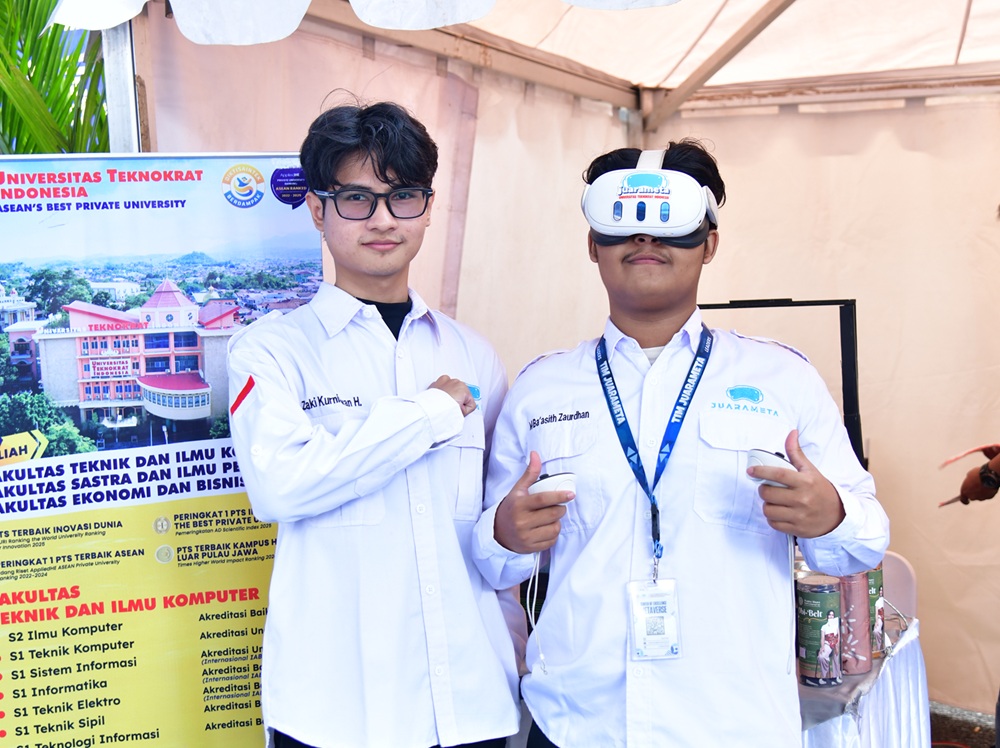
Bandar Lampung – Universitas Teknokrat Indonesia (UTI) continues to demonstrate its commitment to using technology to address real-world challenges. This commitment was reflected in UTI’s participation in the 81st Pengayoman Day celebration organized by the Regional Office of the Ministry of Law in Lampung, under the theme “Digital Transformation for Caring and Impactful Legal Services.” At the event, Universitas Teknokrat Indonesia showcased a range of technology-based innovations and creative works developed by its students. The exhibition highlighted the role of higher education institutions in developing technologies that go beyond academic applications and have the potential to deliver practical benefits to society. Roblox-Based Metaverse for Interactive Digital Experiences One of the innovations that attracted attention was UTI’s metaverse technology based on the Roblox platform. The initiative forms part of the university’s efforts to develop an interactive and immersive digital ecosystem. The metaverse can be utilized for various purposes, including education, entrepreneurship, tourism, and technology-based services. It demonstrates how digital technology can create new experiences that are more interactive, educational, and relevant to the needs of society in the era of digital transformation. The development of metaverse technology also encourages students to move beyond being technology users and become creators and developers of digital innovations. Food Waste Smart: AI Technology for Detecting Food Waste In addition to the metaverse, Universitas Teknokrat Indonesia introduced Food Waste Smart, an innovation developed by students from the Computer Engineering Undergraduate Program. Food Waste Smart uses computer vision technology to detect and analyze food waste left on trays during the implementation of the Free Nutritious Meals (MBG) Program. The technology combines image processing and artificial intelligence to identify the amount of leftover food in a more measurable way. The resulting data can then be used to evaluate consumption patterns and support efforts to reduce food waste. This innovation demonstrates how artificial intelligence can be directed toward solving practical problems. Rather than remaining limited to classroom concepts, student-developed technologies are being designed with practical value and potential for implementation in society. Technology Designed to Address Real-World Challenges The presence of the metaverse and Food Waste Smart at the 81st Pengayoman Day celebration reflects an educational approach that connects learning, research, innovation, and community needs. Through these technologies, Universitas Teknokrat Indonesia emphasizes that digital transformation is not simply about adopting new devices or applications. More importantly, it is about using technology creatively to develop solutions that generate positive impact. “Digital transformation is not only about introducing new technologies, but also about how those technologies can provide real benefits, solve problems, and improve people’s quality of life. Therefore, students need to be continuously encouraged to develop innovations that are relevant to the needs of their time.” Student Entrepreneurship Through UMKM Bazaar Beyond technological innovation, Universitas Teknokrat Indonesia also participated in the event through an UMKM bazaar featuring student-developed creative and entrepreneurial products. The Faculty of Economics and Business (FEB) UTI presented Bloom Tea, while the Faculty of Literature and Education (FSIP) UTI showcased Wastra Aksara. The two products demonstrate that student development at UTI extends beyond academic and technological competencies. Students are also encouraged to create products with economic value while developing their entrepreneurial mindset and creativity. Through activities like this, students gain opportunities to introduce their products, interact directly with the community, and gain practical experience in developing business potential and creative ideas. Strengthening Collaboration Between Higher Education and Government UTI’s participation in the 81st Pengayoman Day celebration also provided an opportunity to strengthen collaboration between higher education institutions, government, businesses, and communities. The university’s presence demonstrates the strategic role of higher education as a center for developing knowledge, technology, innovation, and human resources that can contribute to regional development. Cross-sector collaboration is important to ensure that innovations developed within academic environments have opportunities to be tested, further developed, and implemented on a wider scale. In this way, the outcomes of education and research can extend beyond the campus and generate broader social and economic impact. Supporting Sustainable Digital Transformation Universitas Teknokrat Indonesia continues to foster an academic ecosystem that encourages innovation that is disciplined, high-quality, creative, and innovative. The development of metaverse technology, artificial intelligence, computer vision, and student entrepreneurship forms part of this broader effort. These innovations also demonstrate the important role of higher education in preparing young people for rapid technological change. Students are encouraged to develop critical thinking, creativity, adaptability, and the ability to create technology while considering the needs and interests of society. Supporting the Sustainable Development Goals The activities and innovations presented by Universitas Teknokrat Indonesia are also aligned with the Sustainable Development Goals (SDGs). SDG 4 – Quality Education is reflected through student-led technology development as part of experiential learning, strengthening digital competencies, creativity, and problem-solving skills. The initiatives also contribute to SDG 9 – Industry, Innovation and Infrastructure through the development of metaverse technology, artificial intelligence, and computer vision as innovative approaches to real-world challenges. Meanwhile, Food Waste Smart is relevant to SDG 12 – Responsible Consumption and Production, particularly through the identification and reduction of food waste using data-driven technology. Student entrepreneurship initiatives also support SDG 8 – Decent Work and Economic Growth by strengthening entrepreneurial skills, creativity, and opportunities for young people to develop businesses. Through these contributions, Universitas Teknokrat Indonesia continues to promote education and innovation that are not only focused on technological advancement but also designed to generate sustainable social, economic, and environmental benefits. Becoming Part of Indonesia’s Innovation Ecosystem UTI’s participation in the 81st Pengayoman Day celebration provided an opportunity to introduce academic innovations to a wider audience. Through collaboration among universities, government institutions, students, entrepreneurs, and communities, Universitas Teknokrat Indonesia continues to support the development of an innovation ecosystem capable of addressing the challenges of the digital era. With a commitment to inclusive and impactful digital transformation, Universitas Teknokrat Indonesia will continue encouraging its academic community to develop relevant and sustainable innovations that contribute meaningfully to society and regional development.
Universitas Teknokrat Indonesia Lecturer Serves as Keynote Speaker at International Conference in Peru, Showcasing Metaverse and Immersive Technology Innovations

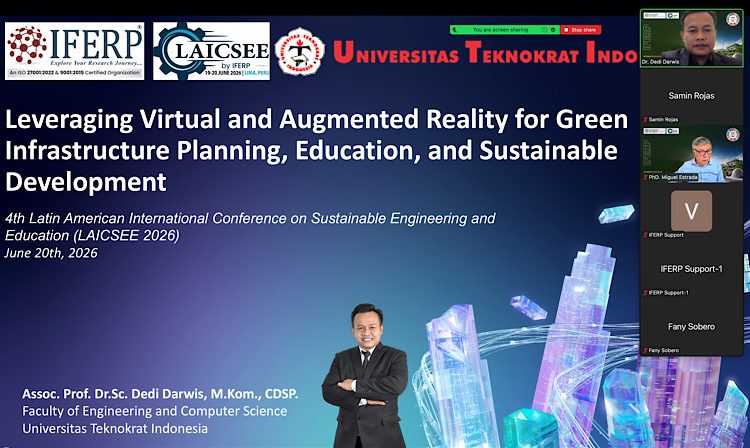
Bandar Lampung – Universitas Teknokrat Indonesia continues to strengthen its international presence through the achievements of its academic community. Assoc. Prof. Dr.Sc. Dedi Darwis, S.Kom., M.Kom., CDSP., Dean of the Faculty of Engineering and Computer Science (FTIK), was invited to serve as a Keynote Speaker at the prestigious 4th Latin American International Conference on Sustainable Engineering and Education (LAICSEE-2026), organized by the Institute for Engineering Research and Publication (IFERP) on June 19–20, 2026, in Lima, Peru. His participation in the international forum reflects the contribution of Universitas Teknokrat Indonesia academics to the fields of technology, education, and sustainable development through digital innovation. The hybrid conference brought together academics, researchers, and practitioners from various countries. Dedi Darwis delivered a presentation titled “Leveraging Virtual and Augmented Reality for Green Infrastructure Planning, Education, and Sustainable Development.” He shared the stage with keynote speakers from countries including Peru, Oman, Malaysia, Iran, and Bangladesh to discuss innovative approaches to global development challenges in the digital transformation era. Highlighting the Importance of Green Infrastructure During his presentation, Dedi Darwis highlighted the growing challenges associated with rapid urbanization. Urban areas currently account for more than 70 percent of global energy consumption and over 60 percent of greenhouse gas emissions, while the proportion of the global population living in cities is projected to approach 70 percent by 2050. He emphasized that green infrastructure—including urban forests, bioswales, ecological corridors, and green roofs—is increasingly important in addressing the impacts of climate change. “Virtual Reality (VR) and Augmented Reality (AR) can serve as a bridge to accelerate the planning, simulation, and educational processes related to green infrastructure, with greater cost efficiency and lower risks before physical implementation,” Dedi Darwis explained. Introducing Four Pillars of Immersive Technology Dedi Darwis also introduced four major technologies that are being developed at Universitas Teknokrat Indonesia: Augmented Reality (AR), Virtual Reality (VR), Mixed Reality (MR), and the Metaverse. These technologies are developed using modern platforms, including Roblox Studio and Meta Quest 2 and Meta Quest 3, to create more realistic, interactive, and collaborative learning and simulation experiences. According to Dedi Darwis, immersive technology is no longer limited to entertainment. It has increasingly become a strategic tool for education, research, urban planning, environmental conservation, and the development of future industries. Six Applications of VR and AR for Sustainable Development During the conference, Dedi Darwis presented six practical applications of VR and AR in supporting sustainable development: He also highlighted the potential of immersive technology to improve learning effectiveness. According to research referenced in his presentation, VR-based learning can increase knowledge retention by up to 75 percent compared with conventional learning methods. JUARAMETA: Indonesia’s Metaverse Innovation One of the highlights of the presentation was JUARAMETA (Center of Excellence in Metaverse) at Universitas Teknokrat Indonesia. JUARAMETA is a metaverse center focused on developing virtual-world technologies for education, culture, business, and society. It is presented as one of Indonesia’s pioneering initiatives in the field. At the international forum, Dedi Darwis introduced several innovations developed through JUARAMETA, including: These innovations demonstrate how metaverse technology can be applied to expand access to education, preserve cultural heritage, develop the digital economy, and support more inclusive community development. Opening Opportunities for International Collaboration At the conclusion of his presentation, Dedi Darwis invited academics and researchers from Latin America and other countries to explore opportunities for international research collaboration in immersive technology and sustainable development. “Sustainable development challenges are global challenges. Therefore, the solutions we develop must also be collaborative and cross-border. We are open to research partnerships, innovation, and joint technology development with institutions around the world,” he said. Rector Applauds Global Achievement Dr. H.M. Nasrullah Yusuf, S.E., M.B.A., Rector of Universitas Teknokrat Indonesia, expressed his appreciation and pride in Dedi Darwis’ achievement. He stated that the recognition received by Universitas Teknokrat Indonesia academics at international forums demonstrates the university’s growing contribution to global discussions on technology, education, and sustainable development. “We are very proud of Dr. Dedi Darwis’ achievement. His participation as a keynote speaker at a prestigious international conference in Peru demonstrates that Universitas Teknokrat Indonesia can contribute to global conversations about the future of technology, education, and sustainable development. This is a source of pride for the entire academic community,” said Nasrullah Yusuf. He added that the university will continue strengthening its research culture, innovation, and international collaboration to produce work with broader societal impact. Vice Rector Encourages Greater Global Engagement Dr. H. Mahathir Muhammad, S.E., M.M., Vice Rector of Universitas Teknokrat Indonesia, also expressed his appreciation for Dedi Darwis’ international contribution. According to him, the achievement reflects the continued efforts of Teknokrat academics to produce research that addresses contemporary global challenges. “We warmly welcome and take great pride in Dr. Dedi Darwis’ achievement as a keynote speaker at an international conference in Peru. His participation not only represents Universitas Teknokrat Indonesia on the global stage, but also demonstrates Indonesia’s contribution to the development of technology for sustainable development. We hope this achievement will inspire even more Teknokrat lecturers to participate in international academic forums,” Mahathir said. Supporting the Sustainable Development Goals Universitas Teknokrat Indonesia’s participation in LAICSEE-2026 is closely connected to several Sustainable Development Goals (SDGs). The innovations presented by Dedi Darwis support SDG 4 – Quality Education through immersive learning using VR and metaverse technologies, helping enhance educational quality and promote more inclusive learning opportunities. The initiative also contributes to SDG 9 – Industry, Innovation and Infrastructure by applying digital technologies to support more efficient and sustainable infrastructure development. The use of VR and AR in urban planning and environmental conservation is also aligned with SDG 11 – Sustainable Cities and Communities and SDG 13 – Climate Action. Meanwhile, the international research collaboration promoted through the conference supports SDG 17 – Partnerships for the Goals. Dedi Darwis’ participation as an international keynote speaker further highlights Universitas Teknokrat Indonesia’s commitment to developing technology-based innovations that address global challenges while contributing to sustainable development.

Universitas Teknokrat Indonesia’s Metaverse CoE Holds “AI for Metaverse Creation” Training at SMKN 2 Bandar Lampung

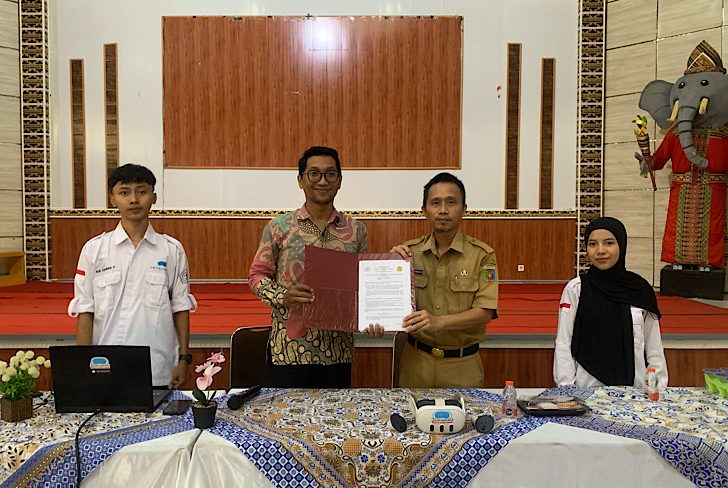
Bandar Lampung – Universitas Teknokrat Indonesia (UTI) continues to strengthen its commitment to developing digital talent through community engagement programs. One of its latest initiatives was the “AI for Metaverse Creation” training organized by the university’s Center of Excellence (CoE) Metaverse at SMKN 2 Bandar Lampung on Tuesday, May 12, 2026. The program represents UTI’s efforts to improve technology literacy among young people, particularly in Artificial Intelligence (AI), metaverse technology, and interactive virtual world development, which are becoming increasingly relevant amid global digital transformation. The training was attended by Ade Dwi Putra, M.Kom., a lecturer from UTI’s CoE Metaverse; Muhammad Iwan, M.Pd., Vice Principal of SMKN 2 Bandar Lampung; the CoE Metaverse student team; and students of SMKN 2 Bandar Lampung. Introducing Future Digital Technologies The activity began with remarks from SMKN 2 Bandar Lampung, which expressed its appreciation for the strategic collaboration with Universitas Teknokrat Indonesia in introducing future-oriented technologies to vocational high school students. In his remarks, Ade Dwi Putra, M.Kom., emphasized that understanding AI and metaverse technologies from an early stage is increasingly important for preparing students to meet the demands of the future digital industry. “Technology is developing at an extremely rapid pace. Therefore, students need direct exposure to AI and metaverse technologies so they can build stronger competencies and competitiveness in the digital era,” he said. The event continued with the signing of a Memorandum of Understanding (MoU) between Universitas Teknokrat Indonesia and SMKN 2 Bandar Lampung, marking their commitment to continued collaboration in education, research, and community engagement. Hands-On AI and Metaverse Development During the practical session, students were given the opportunity to create 3D assets using Artificial Intelligence-based tools. These assets were then imported into Roblox Studio and developed into interactive virtual environments. Students were also introduced to the process of creating a 3D virtual world that could be accessed through computers and Virtual Reality (VR) headsets. The entire practice session was supported by lecturers and students from UTI’s CoE Metaverse, allowing participants to experience the technology through direct, hands-on learning. The approach was designed to help students move beyond theoretical understanding and gain practical experience in applying emerging digital technologies. Building Industry-Relevant Digital Skills Yuri Rahmanto, M.Kom., Head of the UTI Metaverse CoE, explained that the training was designed to provide students with practical knowledge relevant to the current development of the digital industry. “We want to provide students with a learning experience that is practical and relevant to current industry needs. Through this training, students can understand how AI and metaverse technologies can be used to create interactive virtual worlds with significant potential across creative industries and education,” Yuri explained. He expressed hope that the program would encourage young people to continue developing their creativity and exploring opportunities in digital technology and immersive technology. University Commitment to Digital Innovation The Rector of Universitas Teknokrat Indonesia, Dr. H.M. Nasrullah Yusuf, S.E., M.B.A., expressed his appreciation for the CoE Metaverse initiative and its contribution to introducing emerging technologies to younger generations. “We strongly support initiatives that introduce future technologies to young people. Universitas Teknokrat Indonesia is committed to becoming an active institution in developing outstanding digital talent through innovation-driven education and collaboration,” Nasrullah Yusuf said. He added that stronger collaboration between universities and schools can play an important role in accelerating technology-based educational transformation in Indonesia. Meanwhile, Vice Rector of Universitas Teknokrat Indonesia, Dr. H. Mahathir Muhammad, S.E., M.M., also welcomed the implementation of the training. “This activity demonstrates Universitas Teknokrat Indonesia’s continued contribution to society, particularly in strengthening the digital competencies of young people. We hope students will become increasingly motivated to master AI and metaverse technologies as preparation for the future workforce,” Mahathir said. He also encouraged high school and vocational school graduates interested in digital technology, artificial intelligence, and future creative industries to pursue higher education at Universitas Teknokrat Indonesia. Supporting the Sustainable Development Goals The “AI for Metaverse Creation” training aligns with Universitas Teknokrat Indonesia’s commitment to supporting the Sustainable Development Goals (SDGs), particularly: Through programs such as this, Universitas Teknokrat Indonesia continues to strengthen digital literacy, promote future-oriented technological skills, and build meaningful partnerships with schools. The initiative reflects UTI’s broader commitment to preparing a generation that is innovative, adaptable, and ready to face the challenges of the global digital transformation.

Universitas Teknokrat Indonesia Introduces Artificial Intelligence to Al Kautsar High School Scouts Through “Sigma Future Skills” Workshop

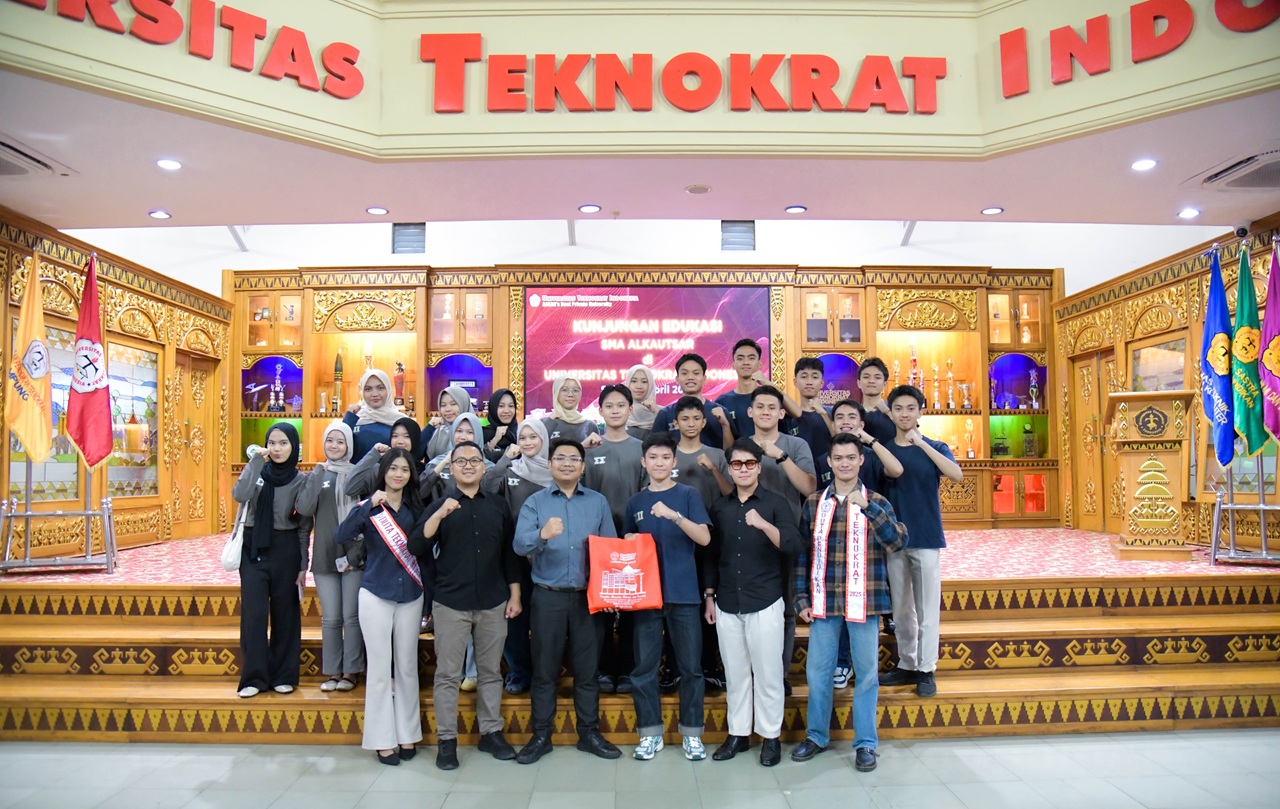
Bandar Lampung – Universitas Teknokrat Indonesia (UTI), a leading university in Lampung, continues to expand digital technology literacy among students through innovative educational initiatives. As part of this commitment, UTI welcomed members of the Scout Movement from Gugus Depan 11.021–11.022, representing the Al Kautsar Foundation in Bandar Lampung, for a workshop titled “Sigma Future Skills: AI Workshop” on Saturday, April 25, 2026. The event was designed to provide high school students with both fundamental knowledge and practical experience in Artificial Intelligence (AI). Held on the UTI campus, the workshop began at 1:15 p.m. Western Indonesia Time and featured Ridwan Mahenra, S.Kom., M.Cs. (AI), an academic at UTI and Head of the Center of Excellence Artificial Intelligence (NeuroMind), as the main speaker. Introducing AI Through a Practical Learning Approach During his presentation, Ridwan emphasized that AI is no longer an exclusive or overly complicated technology for students. Through the “From Zero to Hero” learning approach, participants were introduced to fundamental concepts such as Machine Learning and Computer Vision in a simple and practical manner. “We want to change the perception that AI is complicated. With the right approach, students can learn and even develop AI-based innovations from an early age,” said Ridwan. Beyond theoretical explanations, participants also engaged in hands-on activities using Google Teachable Machine. Through the project “Scout Attribute Detection AI,” students learned how to train a computer system to recognize scouting accessories, such as scout neckerchiefs, using a camera in real time without requiring programming skills. This practical learning experience received positive responses from participants. In addition to improving their technical understanding, the activity helped build students’ confidence in using modern technology creatively and productively. Promoting Responsible and Ethical AI Use The workshop also highlighted the importance of ethics when utilizing artificial intelligence. Ridwan explained that AI should serve as a learning co-pilot, rather than an instant solution for completing assignments without understanding the material. “AI must be used responsibly. Students still need to think critically and verify information to avoid misinformation and misleading content,” he emphasized. This approach encouraged students to recognize both the opportunities and responsibilities associated with AI, particularly in educational settings. By combining technological knowledge with critical thinking, the workshop aimed to prepare students to use AI more effectively and responsibly. Strengthening Collaboration Between Universities and Schools The educational visit represents part of Universitas Teknokrat Indonesia’s efforts to strengthen collaboration with educational institutions in Lampung while supporting technology-based educational transformation. Vice Rector of Universitas Teknokrat Indonesia, Dr. H. Mahathir Muhammad, S.E., M.M., expressed his support for the program and emphasized its importance in preparing young people for the digital era. “We are committed to continuing to provide educational programs that are relevant to technological developments. Through activities like this, students can become not only technology users but also innovators in the future,” he stated. He further explained that partnerships between universities and schools play a key role in developing an educational ecosystem that is adaptive, innovative, and aligned with the demands of the times. The educational visit is expected to serve as a starting point for continued cooperation between Universitas Teknokrat Indonesia and various educational institutions, particularly in developing essential 21st-century skills such as digital literacy, creativity, and critical thinking. Supporting the Sustainable Development Goals (SDGs) The “Sigma Future Skills: AI Workshop” supports the Sustainable Development Goals (SDGs), particularly through technology-based learning and educational collaboration. Through initiatives such as this workshop, Universitas Teknokrat Indonesia continues to promote digital literacy, responsible technology use, and innovation among younger generations. The program demonstrates the value of connecting higher education with schools to develop students who are better prepared for future technological developments.

Scroll to top