
COE Indigenous Language

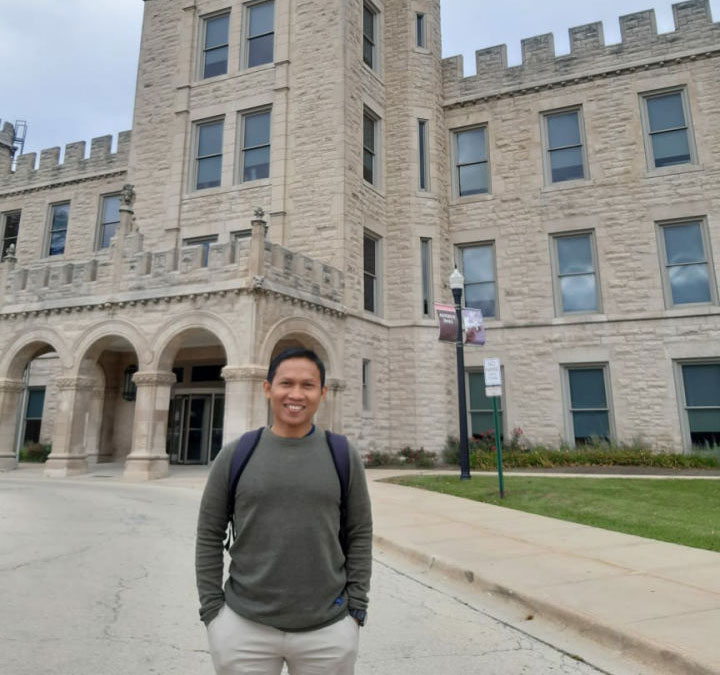
“LANGUAGE EMERGENCY” BY DR AFRIANTO, SS M.HUM

Bandar Lampung, – “Prioritize the Indonesian language, preserve regional languages, and master foreign languages”. This slogan colors the linguistic treasures in the archipelago. However, have you thought about the extent to which local languages ​​are preserved? Forgotten, abandoned, until finally extinct. Lampung has a language (known as Lampung language) which is divided into two main dialects (api and nyow). Each dialect has different characteristics, various sub-dialects and has a writing system in the form of letters. This shows that the Lampung language is rich in linguistic elements when viewed linguistically. In addition, geographically, Lampung Province is a transit area (stopover) between the islands of Java and Sumatra, especially the land route. In addition to the natives, the people who live in Lampung come from various regions outside the province of Lampung, so it can be said that the people of Lampung have blended various ethnicities, cultures, and languages. Having a variety of languages ​​and being a transit area affects the use of the Lampung language. In the fields of commerce, government, and even daily communication, people tend to use Indonesian. Because, in this case the Indonesian language becomes a unifying language in Lampung society and facilitates communication. This indirectly affects the existence of the Lampung language. Furthermore, the population of Lampung in 2018 was 9 million people and it was recorded that around 1 million people were teak speakers. This figure raises the hypothesis that the Lampung language will lose its true speakers. Regarding teak speakers, in 2017, a study that examined the language attitudes of students (Lampung native speakers) concluded that the majority of informants had a negative attitude. In a sense, they tend to use Indonesian, both when talking to their parents and relatives at home or in public places as well as when talking to friends who are also of Lampung ethnicity. In addition, it was also found that the family as the core scale of Lampung language learning is passive, resulting in children not being proficient in Lampung language. According to UNESCO, if at this stage children no longer use their mother tongue at home, the language is threatened with extinction. Another fact is also found in Ethnologue (a page that provides metadata for languages ​​in the world) that the Lampung language is in the threatened category (endangered), both dialects of fire or nyow). Likewise, according to Moseley, that Indonesia has 146 endangered languages, one of which is the Lampung language. Furthermore, there are also other problems related to research on the linguistic elements of the Lampung language. Arka found that from 1975 to 2007 there were 335 regional grammar studies and only 9 Lampung grammar studies were recorded. This means that research on Lampung grammar is still limited. Basically, from the facts mentioned above, it can be concluded that there are four factors that influenced the extinction of the Lampung language, namely transit areas, language diversity, population of native speakers, language attitudes, and limited studies. The complexity of these triggering factors is clearly visible before our eyes. So let’s try to save it. The efforts that can be made include: social field. Using the Lampung language in daily conversations starting from the family environment to public places and introducing the Lampung language through learning at school by prioritizing Lampung language skills. Studying and researching the Lampung language then publishing it in national and international journals and presented at national and international seminars or conferences. In closing, this is the time for us Lampung people to unite and echo “For You, My Lampung”. [Dr Afrianto, SS M.Hum, Lecturer at the Universitas Teknokrat Indonesia]
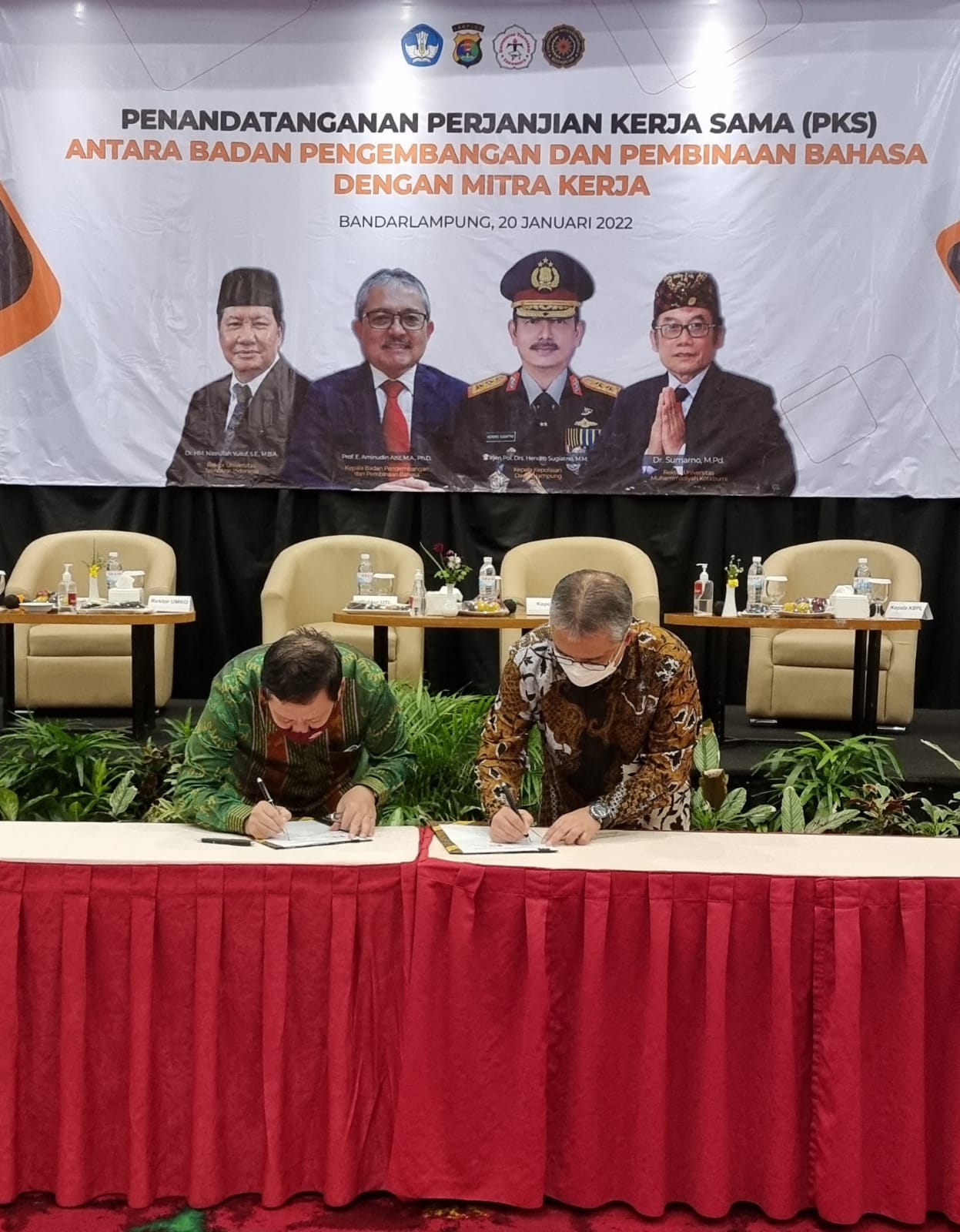
UNIVERSITAS TEKNOKRAT INDONESIA SIGN MCC WITH A LANGUAGE BOARD

To elevate the dignity of the Indonesian language, the Language Development and Development Agency of the Ministry of Education and Culture collaborated with partners including the Universitas Teknokrat Indonesia(UTI) Green Campus Sang Champion Thursday (20/1) at Emersia Hotel and Resort. The signing of the Cooperation Agreement (PKS) was carried out by the Head of the Language Development and Development Agency of the Ministry of Education and Technology Prof. E. Aminudin Aziz, M.A., Ph.D. with the Chancellor of UTI Dr. H Nasrullah Yusuf, SE., MBA., witnessed by the Head of Language Office Eva Krisna and other invited guests. Head of the Kemendikbudristek Language Development and Development Agency Prof. E. Aminudin Aziz, M.A., Ph.D. said if the implementation of the contents of the agreement is the main thing by involving universities to the police. The Head of the Language Development and Development Agency, Prof. E. Aminuddin Aziz, MA, Ph.D. would like to thank all leadership levels including the Universitas Teknoktrat Indonesia for their readiness and willingness to formally cooperate with the Language Development and Development Agency. “Hopefully this can be followed up immediately, and not just a signature. But moving to realize a shared vision and mission,” he said. Chancellor of the Universitas Teknokrat Indonesia Dr. HM Nasrullah Yusuf, SE., MBA. The development of a language, including Indonesian, cannot be separated from the world of education. “Including how students can not only speak Indonesian properly and correctly, but also can convey well regarding their needs,” said Dr. Nasrallah in his speech. He explained, various awards and achievements from lecturers and students from the Universitas Teknokrat Indonesia at International and National. “This is one way to raise our universities at the International and National level, we are also heading for a World Class University,” he continued. Dr. Nasrullah hopes that the achievements of the Universitas Teknokrat Indonesia Best PTS Sumatra can inspire all parties. In the event there was also a speech degree Dr. Nasrullah was one of the speakers. He said that the use of Indonesian in public spaces should not only be good and right, but also be appropriate. This needs to be campaigned on an ongoing basis. “In addition, many people can speak but cannot hear well, this is something that must also be addressed in the future. Then you must also be able to speak Indonesian properly and correctly when writing,” he explained. “We convey language not only speaking, writing, and listening. But also through digital literacy. That also needs to be thought about,” said Dr. Nasrallah further. UTI Chancellor Dr. Nasrullah said that in the world there are many languages that attract the world’s attention, especially big countries such as China, Arabic, Korean, English which are worldwide. This can happen due to many factors including Education and Trade. “Like Arabic, Chinese, and others, it’s because of trade as well as education. For this education factor, Indonesia can attract foreign students. Or if you want to accept foreign students, say Palestine, they have to learn the language first so they don’t have problems later,” he said. In addition, the chancellor, who recently received the best songwriter award from the Indonesian Chancellor Forum, also mentioned that the lecturer who is currently studying in Ireland introduced the Indonesian language used by the mass media. “They show the articles written in the newspapers here to the lecturers there, this is the language used,” he said. In addition, the digital literacy program that has been used by the Universitas  Teknokrat Indonesia for a long time can be a new thought, so as not to be fixated on new things. “It is necessary to encourage good language, the Universitas Teknokrat Indonesia has carried out digital literacy in a different way of delivery. said Dr. Nasrullah In conclusion, we convey that language is no longer writing, speaking, but listening using digital literacy, from practice it must be a new thought and motivation,” he said. The Head of the Lampung Language Office, Dr. Eva Krisna, M. Hum., and Lampung Police Chief Inspector General. Pol. Drs. Hendro Sugiatno, MM. (teknokrat)

International Visiting Lecture Series English Language Education Study Program Universitas Teknokrat Indonesia ASEAN’s Best Private University

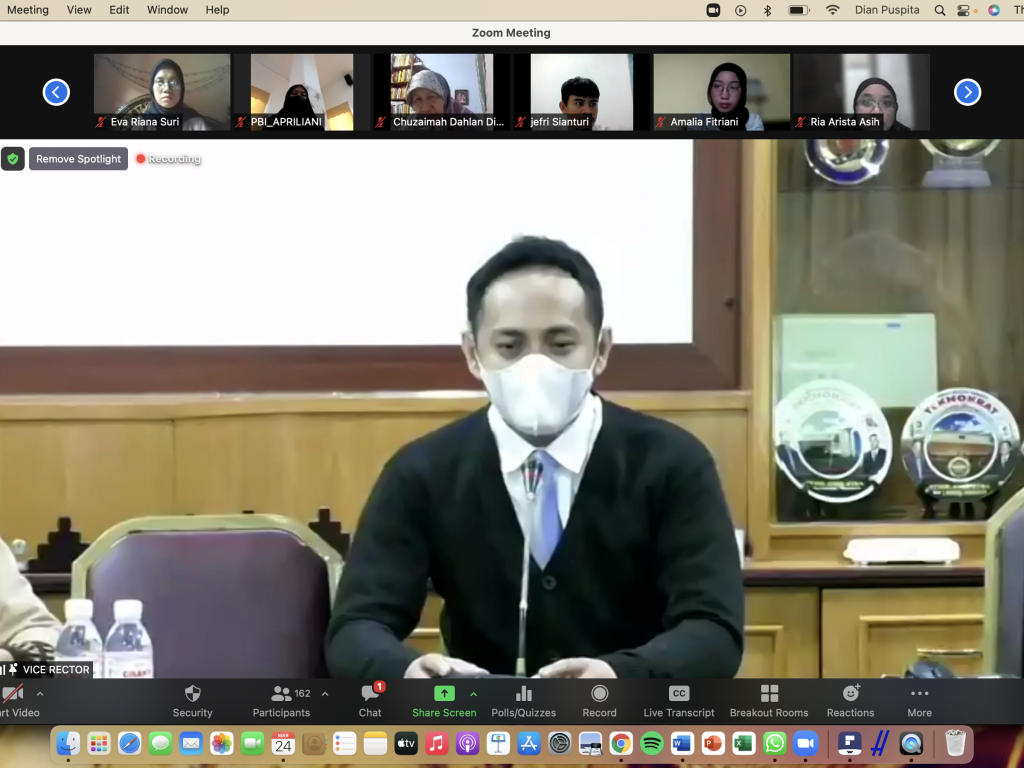
Universitas Teknokrat Indonesia was holding an international visiting lecturer program (International Visiting Lecture) in the English Education Study Program (Thursday, March 24, 2022). The speaker in this lecture is Dr. Dennis Alonzo from the University of New South Wales. The topic in this lecture was “How to conduct quantitative classroom research: design and data analysis” which was attended by more than 190 participants, both lecturers and students at Universitas Teknokrat Indonesia, as well as students from overseas campuses. Dr. Dennis Alonzo completed his Master in Assessment and Evaluation, The University of Melbourne in 2007 and a Ph. D. in Education from the University of New South Wales, Australia in 2016. He was Program Director, Bachelor of Education from 2018 to 2021. Dr. Dennis Alonzo Dennis is a test and scale developer, program evaluator, curriculum designer, and applied statistician. His area of interest revolves around Assessment for Learning (AfL) particularly in supporting teachers to make highly contextualised, consistent, fair, and trustworthy assessment decisions to effectively support student learning. He has been involved in a number of international and national research projects. He also researches on a broad range of topics including student IT experiences, blended and online learning, standards-based assessment, and learning analytics to help inform curriculum design, professional development, and policy. He has received various scholarships from Australian governments and a public diplomacy scholarship from the Ministry of Foreign Affairs of Korea. His latest research is entitled “Acquisition of teacher assessment literacy by pre-service teachers: A review of practices and program designs”. This paper highlights the characteristics of ITE assessment programs in terms of their orientation, content focus, outcomes measure, approaches and duration. Despite the peculiarities of each program, all studies reported their effectiveness in improving a specific area of PST assessment literacy. From our scoping review, it is evident that this body of knowledge is limited and hence more studies are needed to provide a richer conceptualisation of ITE assessment programs. As a result of this review, Dr Dennis Alonzo also developed a framework for designing and implementing an ITE assessment program. On this occasion, the lecture was held on March 24 at 16.00 WIB or 20.00 Australian time through a zoom meeting with the following activities. 1. Message from the Vice Chancellor for Cooperation and General Affairs – Achmad Yudi Wahyudin, S.Pd., M.Pd. 2. Speech by the Dean of the Faculty of Letters and Educational Sciences – Dr. Heri Kuswoyo, S.S., M. Hum. 3. Introduction of resource persons and lecture moderators by the Head of the English Education Study Program – Lulud Oktaviani, S.Pd., M.Pd. 3. Presentation – by Dr. Dennis Alonzo 4. Discussion session – attended by lecturers and students The discussion took place very interactively where the participants actively participated during the lecture through direct survey applications and workshops using padlets. Furthermore, lecturers and students engaged in lengthy question and answer sessions with speakers from the University of New South Wales – Dr. Dennis Alonzo. His presentation on “How to conduct quantitative classroom research: design and data analysis” was very interesting and he appreciated the questions that arose which became the subject of joint discussion for lecturers and students of Universitas Teknokrat Indonesia. According to Dr. Mahathir Muhammad, S.E., M.M. Vice Rector of Universitas Teknokrat Indonesia, ASEAN’s best private university is proven by continuing to support and make efforts to provide the best education for students. One of the efforts to improve the quality of education is to have qualified and reputable lecturers. This program, which is called an international visiting lecturer, is an effort made to provide the best lectures. In addition, through this activity, students also have the opportunity to have international experience, by attending international lectures and interacting with the international community, such as lecturers and students from abroad. (Teknorat)

Scroll to top